5 Bird Facts by John B. Nicol
Hello, hello, everyone!! It’s your friendly neighborhood John B. Nicol coming to you live from the Commonweal Theatre with a fascinating blog about BIRDS!!!
As the seasons start shifting, the ice starts melting, and the birds start migrating, my heart starts to sing. Our first show of our season is a play called No Wake by Erica Berman. A Poignant Lakeside Charmer. In the play, there’s a lot of discussion about loon conservation which is a major issue in certain parts of the United States, namely New Hampshire, where the play is set. As the resident birder in the company, the task has been joyfully bestowed upon me to share some of my favorite bird facts (with sources for further bird reading) particularly some about Loons!
THE FACTS:
Fact #1: There are no blue birds.
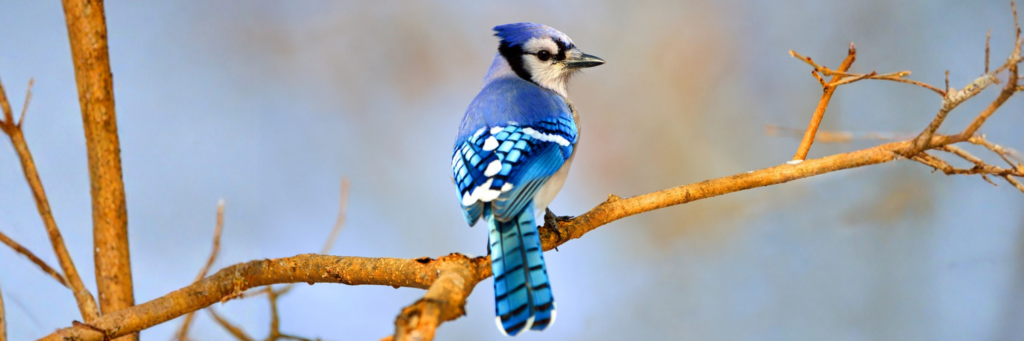
Now, I stated this fact in a way that makes it seem more drastic than it is. This is one of my favorite bird facts and company member Josiah Laubenstein’s least favorite bird fact. Blue feathers actually contain no blue pigment in them. They’re packed with melanin that makes their feathers brown, and NOT blue. However, built into the structure of their feathers are tiny little air pockets that create prisms which break up and disperse light in a way that makes them appear to be blue. If we were to take a feather from a Blue Jay, for example, and grind it up into a powder it would actually create a gray-ish brown powder, and the blue would all be gone.
Fact #2: Shoebills water their eggs.
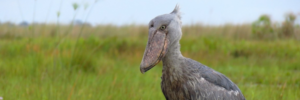
Shoebills are fascinating birds that look prehistoric. They have massive beaks, are known to eat baby crocodiles, and are mostly silent with the exception of a remarkable machine-gun-like sound they make to communicate. On top of all of that, they’re known to take water into their beaks and pour it over their eggs when the temperature gets too hot, behavior that continues until the eggs have hatched and the chicks have grown fully developed feathers.
Fact #3: Loons, unlike most birds, have solid bones.
This is because they’re built to dive deeper into the water, making it easier for them to feed in the lakes. This also means that they need longer runways in order to take off, which can be very difficult because their bones are heavier. Most birds have bones that are hollow, which makes flight easier for them, as it lowers their weight through their skeletal structure.
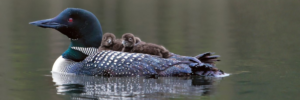
Fact #4: Loons carry their young on their backs while swimming.
While their young are small, loons often serve as small carriers for them in the water for a number of reasons. Mainly to help ward off predators, such as eagles, who might view a small loon chick on the water as a tasty snack. Also, this helps keep them warm while out on the lake where temperatures can be cooler.
 Fact #5: Loons’ eyes change colors with their seasons.
We always imagine loons to have their striking crimson eyes, but did you know that when not in their mating season, loons eyes will change color to a more grayish brown their feathers will also general lean away from their typical spotted white and black color to a more brown look in the off season.
CONNECTING WITH BIRDS
Something I love about birds is that they’re a beautifully free thing to connect to. If you go outdoors, there are birds there. Here in Lanesboro, we’re incredibly lucky to have such a plethora of birds around. On some of my walks I’ll see birds ranging from pigeons sitting on rooftops, to bald eagles soaring overhead. Here are some ways to connect with birds that I really enjoy:
The Dawn Chorus
The dawn chorus is a phenomenon that happens every spring, usually starting as early as March, and happening every morning through the month of May. Each day, for about thirty minutes before sunrise, there’s a large increase in birdsong in rural and woodland areas. This is called the dawn chorus. I listened to the dawn chorus for the first time last year, and it was a remarkable experience. Part of the reasoning behind this phenomenon has to do with bird mating. At the beginning of the day, male birds want to showcase their fitness and prowess at surviving the night, and will then sing out loudly in an attempt to attract a mate. They also sing to inform other birds of their territory, and to keep other birds away. I plan on going to listen to it at least once or twice this year, but hopefully I can peel myself out from under the covers early enough to listen more than that.
Birding and Bird Journals
Birding, sometimes referred to as bird-watching, can be an incredibly rewarding pastime. The act of watching birds interact with nature, observing their behavior, learning about them, learning from them, is a great way to connect with the world we live in. I have a journal set up where I’ll make light notes when I’m consciously birding. Then later, when I’m at a computer or having time on my phone, I can do some more research on what I saw or answer any questions I had without being interrupted in the moment. Some birders are known to make sketches in their field journals, others are more analytical. There’s no “right” way to participate in the act of birding, what’s important is connecting with the birds around you without intruding on their lives.
The Great Backyard Bird Count
This is a great and easy way to connect a love of the birds around you with the greater community of birders. Each year in February, Audubon, CornellLab, and Birds Canada conduct “The Great Backyard Bird Count” where birders can report the birds they see for even just 15 minutes each day. This data is then used to help inform scientists so they can better understand and protect birds, as migration timings and patterns shift. Click this link for more information about The Great Backyard Bird Count.
FURTHER RESOURCES
With this last section I would like to share with you a few resources that I use/have used on my journey to loving birds the way that I do.
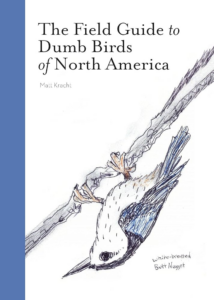 The Field Guide to Dumb Birds of North America by Matt Kracht
This is my favorite of the Field Guide books that I own. It’s a joy to flip through and reference. It’s funny, crass, has some strong language, but also is pretty informational. When in need of a good chuckle, I know this book will always give me one. It also has a couple of great notes about bird feeders, keeping a bird journal, and is overall a wonderful resource.
Wingspan: a board game published by Stonemaier Games, designed by Elizabeth Hargrave, illustrated by Natalia Rojas & Ana Maria Martinez.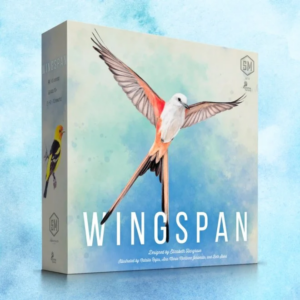
I LOVE THIS GAME!!! It’s a fun, and semi complicated board game where you add birds into your different habitats and compete with friends to earn points based on a number of different qualifications. What I love about this game is how clever many of the birds’ effects are. Some are great egg layers and that’s reflected in the game, whereas others are more predatorial and that’s reflected in the game. It’s very fun and worth looking at if you’re into board games and birds.
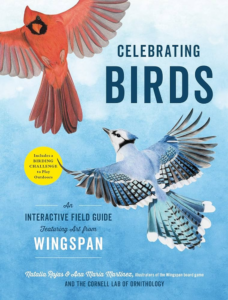 Celebrating Birds: An Interactive Field Guide Featuring Art from Wingspan by Natalia Rojas & Ana Maria Martinez and the Cornell Lab of Ornithology
This is another wonderful, albeit more serious Field Guide book. The art from this book is some of the most beautiful bird art that I’ve ever seen. It’s absolutely gorgeous. Natalia Rojas and Ana Maria Martinez really captured every bird in this book absolutely beautifully. The book also contains a fun interactive activity to encourage people to watch for birds in their surrounding area. While I haven’t yet had the opportunity to try the activity, it seems like it would be an absolute joy!!
Slow Birding: The Art and Science of Enjoying the Birds in Your Own Backyard by Joan E. Strassmann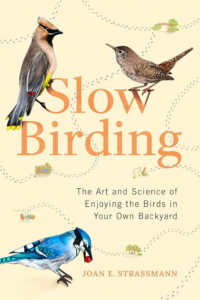
This is what’s next on my list of bird books to read. (It’s still about 2 or 3 deep on my reading list, but it’s on there!) I’ve lately been fascinated by the idea of slowing down and taking steps with care. Birding slowly, appreciating the birds around you feels like a great start to that mentality. Some birders are into the idea of bustling around from continent to continent to see them all, where I like to sit and really enjoy the bird and its behavior.
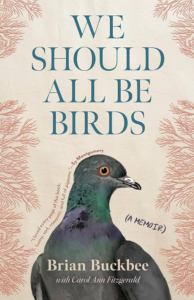
We Should All Be Birds by Brian Buckbee
This is a wonderful memoir about Brian Buckbee and Two-Step, a man and his pigeon. It touches so beautifully on humanity, nature, and the way these two things can help each other out. I read this book last year and it really resonated with my heart and reminded me of the joy that birds can bring to people’s liveseven at the darkest of times.
With that, it’s time for me to wrap up my blog post about birds! It’s been a joy to put this together, and I’m hopeful that you like this as much as I do. I’m excited for migration to start becoming more evident here in Lanesboro, I can tell that more birds are starting to arrive just by walking around town. I can’t wait to see how No Wake shapes up, and to share in the beauty of this story and this season with you all!!
See you soon!
John B. Nicol