By Jeremy van Meter
 As the final performance of The Elephant Man approaches, I am struck by the power of learning lessons as an adult—an “almost 50-year old adult.” In the portrayal of a character, there is always something to be learned if one remains open to the process. Even in playing the most minor of characters, I have always walked away knowing a little bit more about myself as a person and about the world around me. In the portrayal of Dr. Frederick Treves in The Elephant Man, what I have gained is invaluable and, I know this sounds cliché, what I have gained has made me a better man.
When rehearsal began this past April, I knew the life story of Joseph Merrick but I had no idea or had forgotten who Merrick was as a person. I had no idea that he was an avid reader. I did not know that he was a lover of poetry. I was not aware that he built, with one hand, miniature models of cathedrals and churches.  It was a surprise to me that several times over the course of two years he vacationed and walked the grounds of Fawlsey Hall Estate in Northamptonshire where he would collect wildflowers to return to London with. I, like so many others before me, had labeled him as “less than” and not as intelligent as he actually was. And that is the most powerful lesson I have learned.
I, like Treves at the outset of the play, made my impressions about Merrick based on his outward appearance. Treves saw the advancement of science and his own career through the discovery of something that no one had ever seen before. For Treves, Merrick was a “case study” and it was not until he had the opportunity to see the man inside the study, that his life was changed. In today’s society, it is so easy and convenient to toss around labels. And once that label is placed, for whatever reason, the human being inside is overlooked and done a huge disservice. We do a disservice to ourselves as well.
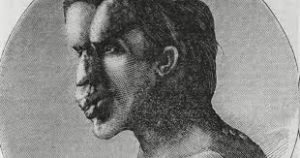 Because of these characters—Frederick Treves and Joseph Merrick—and this play, I have made a vow to avoid placing labels on anyone. I have made a vow to live in a way that I “See” everyone I come into contact with. And, yes, that capital S I just used in the word “see” is intentional. There are amazing human beings all around us especially those that we categorize as “other.” I have made a vow to never look past them but to instead attempt to look inside them.
The Elephant Man plays through September 2nd at the Commonweal and if you have yet to experience it, I urge you to do so. The play, the story and the man inside both altered my life and I just bet it will do the same for you.
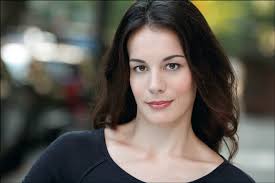 When I first received an email in March from the Commonweal Theatre offering me the role of Mrs. Kendal in Bernard Pomerance’s The Elephant Man, I was honestly torn. On the one hand, I was excited beyond words at the chance to tackle this challenging story, but on the other hand, I had a sense of trepidation because I’d been firmly rooted in the New York/New Jersey area since finishing graduate school a few years prior. Moreover, I’d never been to the Midwest before (a three day trip in high school to Appleton, Wisconsin for a public speaking tournament doesn’t count) and I didn’t know how I would adapt to what I assumed would be a different environment. The pros outweighed the cons, however, and I quickly accepted the role and began the process of preparing myself.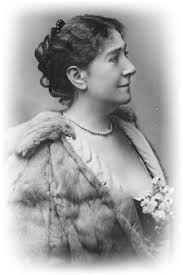
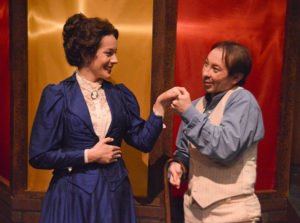 My favorite aspect of working at the Commonweal has undoubtedly been the sense of community and inclusiveness that the ensemble projects. In New York, I never truly felt at home or comfortable in the theatrical community due to the intensely competitive nature of the business, where the prevailing attitude has always been that of “me first,” which is very much not what I experienced in college and grad school. At the Commonweal, I felt more welcomed and embraced than any other experience I’ve had thus far. Thanks to the love and support of my fellow artists, I personally feel like I’ve grown tremendously both as an artist and as a human being during my time here, and that is something I’ll always keep with me.